
Disclaimer: This article is for educational purposes only and does not constitute investment advice. Dividend yields change with stock price and company announcements. Please verify current figures on NSE/BSE filings or consult a SEBI-registered investment advisor before investing.
Quick Answer: As of 2026, the private sector stocks offering the highest dividend yields in India include Castrol India, ITC, HCL Technologies, Wipro, Hindustan Zinc, TCS, Hero MotoCorp, Infosys, Bajaj Auto, and Tata Steel — with Vedanta as a notable bonus pick whose dividend yield is currently distorted by its ongoing demerger.
Why Dividend Investing Matters in India
Dividend investing appeals to investors who want a share of company profits paid out on a schedule, rather than relying solely on stock price appreciation for returns. In a market where foreign investors pulled over $23 billion from Indian equities in 2026, dividend-paying stocks offered a cash cushion even when broader indices moved sideways or fell.
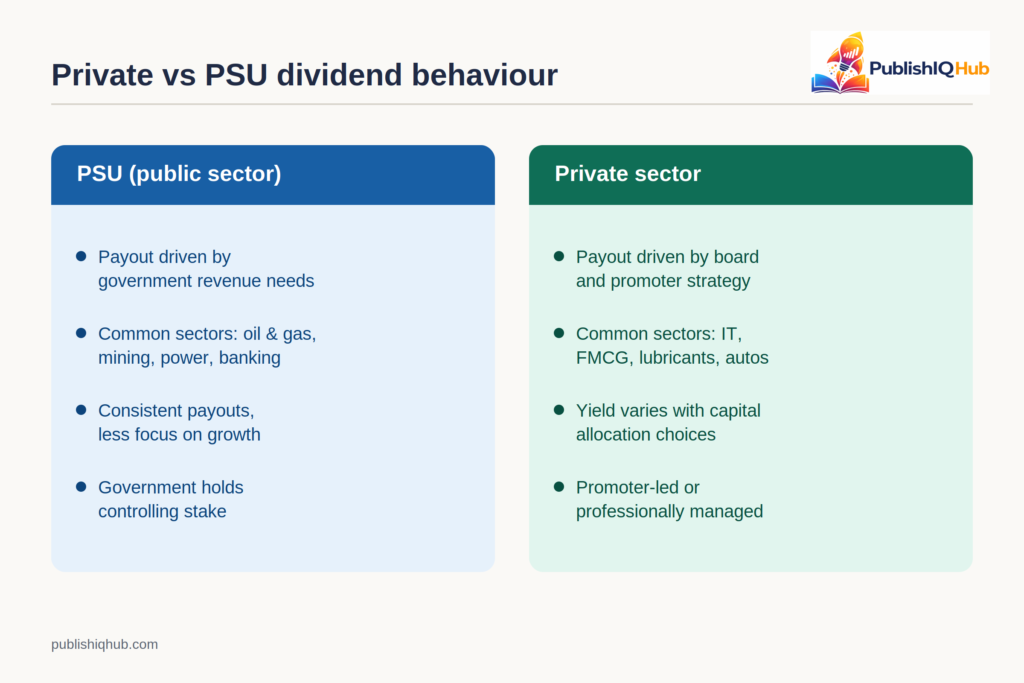
Private sector companies behave differently from PSUs (public sector undertakings) when it comes to dividends. PSUs like Coal India and ONGC often pay high dividends because the government, as majority shareholder, pushes for consistent payouts. Private companies, by contrast, set dividend policy based on capital allocation strategy, growth plans, and promoter preference — which means the “why” behind a private stock’s high yield is worth understanding before you buy.
The Nifty 50’s average dividend yield sits near 1.2%, so anything above 3–4% is generally considered high for the broader market. Sectors like IT services, FMCG, metals, and lubricants tend to produce the most reliable private-sector dividend payers, because these businesses generate steady operating cash flow without needing to constantly reinvest in new capacity the way a growth-stage company might. If price growth matters as much as income to you, it’s worth cross-checking this list against our roundup of the best-performing Indian stocks in 2026, since a handful of names show up on both.
This list focuses specifically on private sector companies — meaning promoter-led or professionally managed businesses where the government does not hold a controlling stake — rather than PSUs. That distinction matters because the two groups behave differently. PSU dividend policy is often shaped by the government’s own revenue needs in a given year, while private sector payouts are set by company boards based on internal capital allocation priorities, growth plans, and, in some cases, promoter family income needs.
3 Stats Worth Knowing Before You Invest
- The Nifty Dividend Opportunities 50 Index delivered a 5.30% one-year total return, with a 2.85% dividend yield built into that figure.
- Hero MotoCorp’s dividend has grown at a strong pace over the last five years, one of the more consistent growth rates on this list.
- Castrol India has raised its dividend for seven consecutive years, a track record that matters more than any single high-yield year.
The Top 10 Private Sector Dividend Stocks in India (2026)
1. Castrol India — ~6-8% Yield
Sector: Lubricants/Consumer Castrol India, the Indian arm of BP’s lubricants business, tops this list with one of the most consistent high yields among private companies. It has raised its dividend for seven straight years, and its payout is backed by steady cash generation from a business that doesn’t need heavy capital reinvestment. The company’s payout ratio sits in a moderate range, meaning the dividend is well covered by earnings rather than stretched thin — a detail that separates a durable high yield from one that’s a warning sign in disguise. Why it makes the list: rare combination of high yield and dividend growth consistency.
2. ITC — ~5.0-5.4% Yield
Sector: FMCG ITC is one of India’s most widely held dividend stocks, spanning cigarettes, FMCG, hotels, and paperboard. Its yield has stayed in a tight band across data sources, a sign of a stable, well-covered payout. The company’s diversified business mix means its dividend isn’t dependent on a single product category, which has historically made it one of the steadier large-cap dividend names for income-focused portfolios. Why it makes the list: diversified cash flows and a long dividend history.
3. HCL Technologies — ~4.5-5% Yield
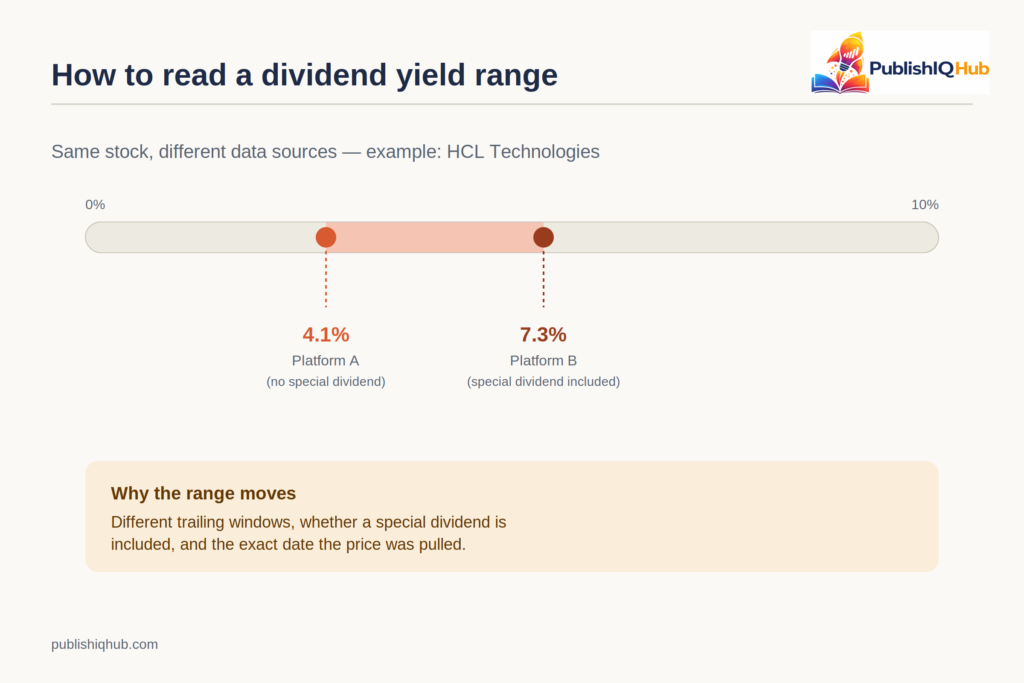
Sector: IT Services HCL Technologies pays quarterly dividends and has grown its payout at close to 19% annually over five years. Yield estimates vary across data providers depending on how recently a special or interim dividend is annualized, so the figure you see can shift by more than two percentage points depending on the source and the exact date it was pulled. As an IT services exporter, its dividend capacity is tied to global technology spending cycles and currency movements. Why it makes the list: frequent payouts and a strong dividend growth track record.
4. Wipro — ~4.3% Yield
Sector: IT Services Wipro rounds out the IT services cluster on this list, offering a yield that sits above the sector average. As with HCL, cross-check the trailing-12-month figure, since some data sources annualize a single quarterly dividend incorrectly, which can make the headline number look far higher than what an investor would actually receive over a year. Wipro has also leaned on buybacks alongside dividends as a way of returning cash to shareholders. Why it makes the list: steady payout from a large-cap IT exporter.
5. Hindustan Zinc — ~2-4% Yield (variable)
Sector: Metals & Mining Hindustan Zinc, a Vedanta group company, has paid large special dividends in the past, which makes its trailing yield swing depending on the measurement window — one snapshot shows under 2%, another closer to 4.3% on a forward basis. Its base business — zinc, lead, and silver production — remains a strong cash generator, and the company has continued investing in capacity expansion even while maintaining payouts. Why it makes the list: high historical payouts, though the current headline yield needs a same-period comparison to read correctly.
6. TCS — ~3.9% Yield
Sector: IT Services Tata Consultancy Services is India’s largest IT services company by market cap and has paid dividends every year since its listing, including occasional special dividends. Yield figures vary depending on whether a special dividend from a recent period is included in the trailing calculation, which is why some sources show a figure closer to 1.6% and others closer to 3.9% for the same company in the same general period. TCS also maintains one of the highest promoter holdings among the stocks on this list, which tends to support dividend policy stability. Why it makes the list: long, uninterrupted dividend history from India’s largest IT company.
7. Hero MotoCorp — ~3.3% Yield
Sector: Automobiles The world’s largest two-wheeler manufacturer by volume, Hero MotoCorp pays both interim and final dividends each year. Its five-year dividend growth rate of roughly 15.5% is one of the stronger growth figures on this list, and its payout ratio — in the 60-67% range depending on the period measured — leaves room to keep raising dividends without overextending against earnings. Why it makes the list: consistent multi-payout structure and above-average dividend growth.
8. Infosys — ~2.2-2.4% Yield
Sector: IT Services Infosys offers a slightly higher current yield than TCS, though TCS has the edge on payout longevity and lower valuation multiples. Infosys also runs regular buyback programs alongside dividends, and its lower P/E relative to TCS has made it a common pick for investors comparing entry valuation across the two IT majors. Why it makes the list: shareholder-friendly capital allocation combining dividends and buybacks.
9. Bajaj Auto — ~2.4% Yield
Sector: Automobiles Bajaj Auto pays an annual dividend and has supplemented shareholder returns with multiple buyback programs in recent years, including one of its largest buybacks to date in 2026. Its total shareholder yield — dividends plus buybacks combined — tends to run higher than the dividend yield alone would suggest, which is worth factoring in if you’re comparing total cash return rather than dividend income specifically. Why it makes the list: consistent annual payer with buyback support.
10. Tata Steel — ~2.2% Yield
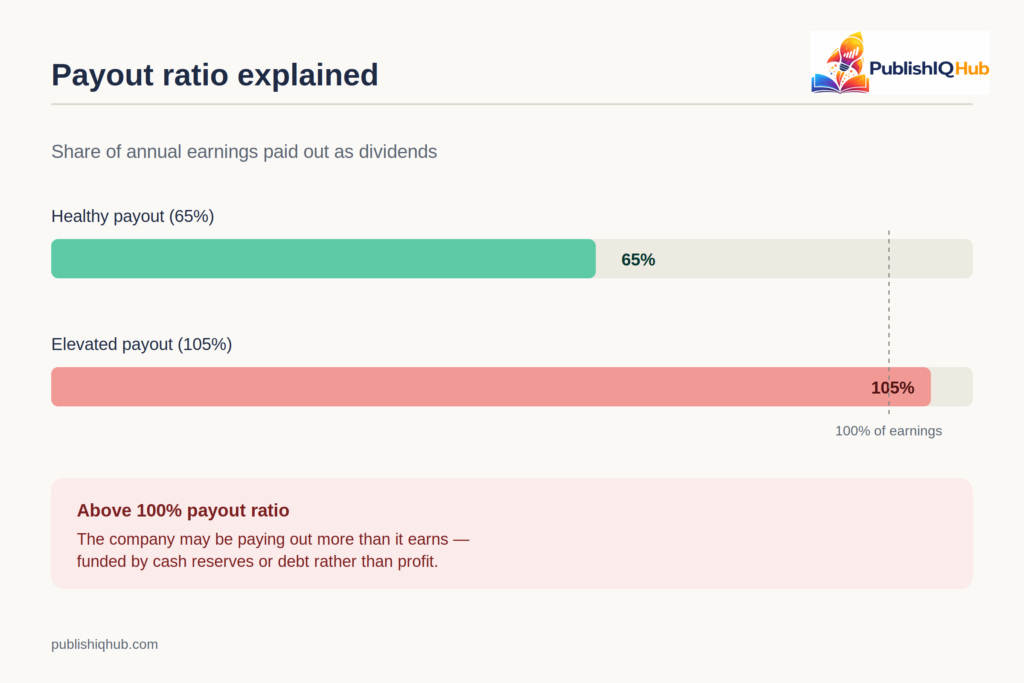
Sector: Metals & Mining Tata Steel has raised its dividend for two consecutive years, but one data source flags a payout ratio above 100% of earnings in a recent period — a signal to check whether the dividend is being funded by earnings or by cash reserves/debt. As a cyclical commodity business, its dividend capacity moves with steel prices and global demand, so investors should expect more year-to-year variability here than with the FMCG or IT names on this list. For a deeper look at how the broader Tata group has performed, see our Tata Group stock returns breakdown. Why it makes the list: rising dividend trend, though sustainability needs a closer look.
Bonus Pick: Vedanta — The Demerger Wildcard
Vedanta would otherwise top this list outright, with dividend yield estimates ranging from roughly 9.6% to as high as 12% depending on the data window used. We’ve called it out separately rather than ranking it in the top 10 because Vedanta is in the middle of demerging into sector-focused entities (metals, oil & gas, power, and more), a process that is actively changing its share count, balance sheet, and dividend base. Any yield figure quoted today may not hold once the demerger completes, so treat Vedanta as a name to watch rather than a stable comparison point against the other nine stocks above.
Vedanta’s dividend history also includes some of the largest single payouts in the Indian market — its dividend per share has run into double digits in recent years, funded partly by stake sales in subsidiaries like Hindustan Zinc. That aggressive payout style is part of why it tops every yield ranking, but it’s also exactly why the number is harder to rely on for a like-for-like comparison against steadier payers like Castrol India or ITC.
Why it’s a bonus pick, not a ranked one: dividend and payout figures are in flux mid-demerger, making apples-to-apples comparison unreliable right now.
Comparison Table: Top 10 Private Dividend Stocks
| Rank | Company | Sector | Dividend Yield | Payout Frequency |
| 1 | Castrol India | Lubricants | ~6-8% | Semi-annual |
| 2 | ITC | FMCG | ~5.0-5.4% | Multiple/year |
| 3 | HCL Technologies | IT Services | ~4.5-5% | Quarterly |
| 4 | Wipro | IT Services | ~4.3% | Quarterly |
| 5 | Hindustan Zinc | Metals & Mining | ~2-4% (variable) | Semi-annual |
| 6 | TCS | IT Services | ~3.9% | Quarterly + special |
| 7 | Hero MotoCorp | Automobiles | ~3.3% | Interim + final |
| 8 | Infosys | IT Services | ~2.2-2.4% | Multiple/year |
| 9 | Bajaj Auto | Automobiles | ~2.4% | Annual |
| 10 | Tata Steel | Metals & Mining | ~2.2% | Annual |
| Bonus | Vedanta | Metals & Mining | ~9.6-12% (in flux) | Multiple/year |
Risks and Considerations Before You Buy
A high dividend yield is not automatically a good sign. Sometimes it means the share price has fallen sharply due to underlying business problems, not that the company is being unusually generous. Before buying any stock on this list, check:
- Payout ratio: A ratio consistently above 100% suggests the company may be paying more than it earns, funded by cash reserves or debt. Sites like Screener.in let you check a company’s payout ratio and dividend history directly against its financial statements.
- Dividend history: A company that has paid, and ideally grown, its dividend through both strong and weak years shows more discipline than one unusually high-yield year.
- Sector concentration: Four of the ten stocks above are IT services companies. If IT sector dividends soften in a weak year for the industry, that concentration risk hits multiple positions in a portfolio at once.
- Tax treatment: Dividend income in India is taxed at your income slab rate, and TDS of 10% applies if dividend income from a single company exceeds ₹10,000 in a financial year (20% or applicable DTAA rate for NRI investors).
- Total shareholder return vs dividend yield alone: Some companies on this list, like Bajaj Auto and Infosys, combine dividends with regular buybacks. Looking only at dividend yield can understate how much cash a company is actually returning to shareholders.
- Special dividends skew comparisons: As seen with TCS and Hindustan Zinc, a one-time special dividend can make a single year’s yield look unusually high. When comparing stocks, it helps to look at the ordinary/recurring dividend separately from any special payout.
A well-diversified dividend portfolio typically spans 8-12 stocks across 4-5 sectors, which reduces the risk of any single dividend cut affecting your overall income stream. Given that four of the ten stocks above are IT services companies, an investor building a portfolio from this list alone may want to add exposure from FMCG, pharma, or utility sectors to round out diversification. If you’re setting up an account to buy any of these, our guide to the top stock brokers in India breaks down which platforms suit long-term, buy-and-hold investing best.
FAQs
What is considered a good dividend yield in India?
Typically, a yield above 3-4% is considered high compared to the Nifty 50 average of around 1.2%
Are private sector dividend stocks safer than PSU dividend stocks?
Not necessarily. PSU dividends often benefit from government policy pushing for consistent payouts, while private sector payouts depend more on company-specific capital allocation decisions. Both carry different risk profiles.
Why does Vedanta’s dividend yield vary so much across sources?
Vedanta is currently undergoing a demerger into separate sector-focused entities, which is changing its share base and financial structure. Yield figures calculated before and during this process may not be comparable.
How is dividend yield calculated?
Dividend yield is the annual dividend per share divided by the current share price, expressed as a percentage. It moves whenever either the dividend amount or the share price changes.
Is a high dividend yield always a good sign?
No. A high yield can result from a falling share price rather than a generous payout, so it should always be checked alongside payout ratio, earnings growth, and dividend history.
Why do IT services companies dominate this list?
Indian IT exporters like TCS, Infosys, HCL Technologies, and Wipro generate large, predictable free cash flows with relatively low capital reinvestment needs, which makes them natural dividend payers. This also means their dividends can move together in a weak year for the sector, so it’s worth balancing IT exposure with other sectors in a dividend-focused portfolio.
Should I buy a stock only because of its dividend yield?
No. Yield is one input among several. Payout ratio, earnings growth, sector outlook, and the company’s overall financial health all affect whether a dividend is sustainable, so treat yield as a starting point for research rather than a standalone buy signal.