
The global business landscape has undergone a radical transformation in the last few years. According to recent industry reports, nearly 64% of mid-market enterprises have now moved their entire finance function to a decentralized or outsourced model, signaling a permanent departure from traditional in-house departments. In this high-velocity environment, accounting outsourcing is no longer just a tactical move to save on overhead; it is a fundamental pillar of strategic agility.
As we navigate the complexities of a globalized, AI-integrated economy, the role of the “back office” has been redefined. It is no longer a cost center tucked away in a physical office; it is a cloud-native, real-time intelligence hub. Whether you are a founder looking for outsourcing accounting services for a small business or a CFO streamlining a multinational, understanding the current state of the industry is essential for maintaining a competitive edge.
1. The 2026 Evolution: Beyond Bookkeeping
Historically, the primary motivation for seeking outsourcing accounting services was cost reduction- finding cheaper labor to handle the “drudge work” of data entry. Now, the value proposition has shifted toward capability acquisition.
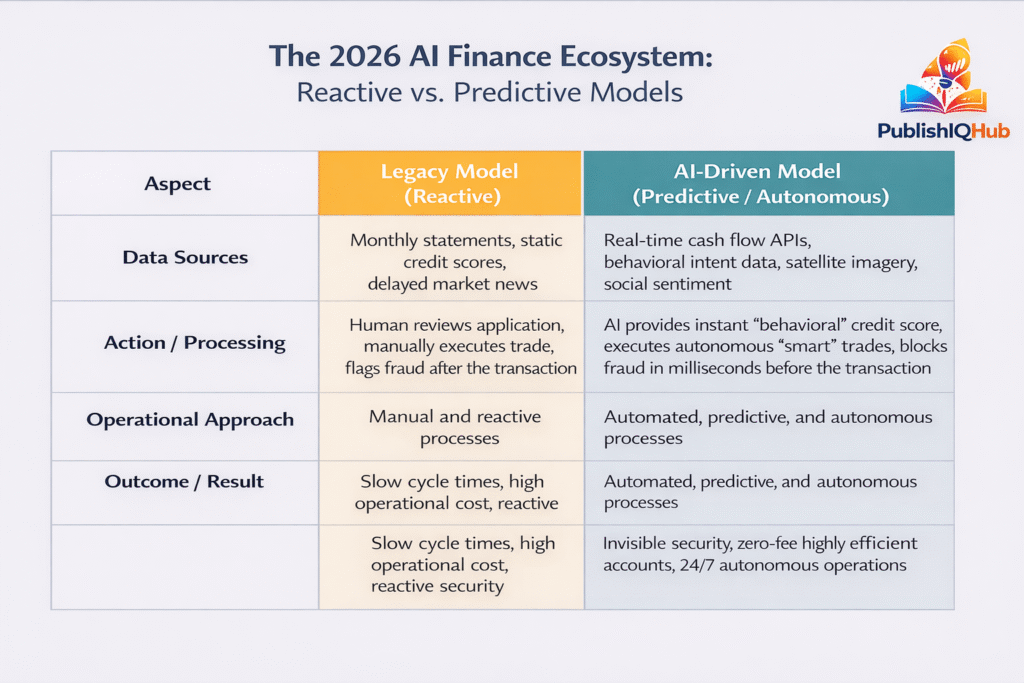
Modern firms are no longer looking for someone to “do the books”; they are looking for a partner to build a “system of action.” This means moving from retrospective reporting (what happened last month) to predictive forecasting (what will happen next quarter). With the integration of Agentic AI into financial workflows, the speed of the “monthly close” has dropped from weeks to hours, allowing leaders to make decisions based on today’s data, not last month’s history.
2. Navigating the Landscape of Outsourced Accounting Firms
The market for outsourced accounting firms has become highly specialized. Choosing the right partner requires an understanding of the three primary tiers of service currently available:
The Transactional Tier
This is the foundational level of outsourcing, focusing on high-volume, repetitive tasks such as payroll processing, accounts payable, and bank reconciliations. This tier is essential for businesses that need to free up their internal team from administrative burdens but don’t yet require high-level strategic advice. These tasks are heavily augmented by AI, ensuring near-zero error rates in data entry.
The Advisory & Controller Tier
At this level, firms act as a fractional finance department. They provide variance analysis, cash flow management, and technical accounting oversight. These firms are critical for businesses in a “scale-up” phase where financial complexity outpaces the founder’s ability to manage it. They don’t just provide the data; they explain what the data means for your next hire or your next product launch.
The Virtual CFO Tier
The best outsourced accounting services offer a Virtual CFO (vCFO) function. These partners don’t just manage the ledger; they participate in board meetings, assist with capital raising, and provide the long-term financial modeling required for mergers and acquisitions. This allows a $10M company to have the financial sophistication of a $100M company.
3. Outsourcing Accounting Services for Small Business
Small businesses have historically been the most underserved segment of the financial market. They were often too large for DIY software but too small to afford a full-time Controller. Outsourcing accounting services for small business has effectively “democratized” elite finance functions.
- Technology Arbitrage: Small businesses can now leverage enterprise-grade software like NetSuite or Sage Intacct through their outsourcing partner, avoiding the massive licensing fees they would face on their own.
- Risk Mitigation: For a small business, a single error in tax filing or payroll compliance can be devastating. Outsourced firms provide a “safety net” of professional liability and up-to-date regulatory knowledge.
- Focus on Core Competency: By removing the distraction of the ledger, founders can focus on what actually drives revenue: product development and customer acquisition.
- Investor Readiness: Having a professional, outsourced firm manage your books from day one makes the due diligence process infinitely smoother when it comes time to raise Venture Capital or secure a bank loan.
4. Identifying the Best Outsourced Accounting Services
In a sea of providers, how do you identify the best outsourced accounting services? Today the “gold standard” is defined by four key technological and operational pillars:
- Continuous Close Capability: The firm should offer a live dashboard. Waiting for a “Month-End Package” is an obsolete practice. You should be able to see your burn rate, runway, and accounts receivable in real-time.
- Tech-Stack Agnostic Integration: A top-tier firm shouldn’t force you into one software. They should be able to integrate your existing CRM, POS, and inventory systems into a unified “Single Source of Truth.”
- Advanced Security Protocols: Ensure the firm holds a SOC 2 Type II certification. With the rise of deep-fake financial fraud, your partner must have rigorous “human-in-the-loop” verification for any movement of capital.
- Cultural and Strategic Alignment: The best partners act as an extension of your team. They should understand your 3-year exit strategy or your 5-year expansion plan, not just your 1099 filings.
5. The Operational Impact of Outsourced Teams
When a company transitions to outsourcing accounting services, the impact ripples through every department, not just finance.
For the Sales Team
With real-time commission tracking and faster invoice processing, sales teams see their rewards more quickly, leading to higher morale. Furthermore, precise data on customer acquisition costs (CAC) allows sales leaders to pivot their strategies toward the most profitable segments instantly.
For the Operations Team
Inventory management becomes a precision science rather than a guessing game. By integrating accounting data with supply chain logs, outsourced firms can alert operations when stock levels are reaching a critical point based on predicted sales velocity, preventing “stock-outs” and lost revenue.
For the HR Department
Payroll, benefits administration, and tax withholding are handled with 100% compliance. This removes the administrative burden from HR, allowing them to focus on talent acquisition and culture building in an increasingly competitive labor market.
6. Global Compliance in a Borderless Economy
Nowadays, even small businesses often have global footprints—selling to customers in Europe, employing contractors in Asia, and managing developers in South America. Outsourced accounting firms provide the multi-jurisdictional expertise required to manage:
- VAT and GST Compliance: Navigating the complex tax codes of different nations without needing to hire a local expert in every country.
- Transfer Pricing: Ensuring that inter-company transactions are handled legally and efficiently to minimize global tax liabilities.
- Currency Fluctuations: Using automated hedging strategies to protect the company’s bottom line from the volatility of international exchange rates.
Conclusion: The Path to Financial Agility
The decision to embrace accounting outsourcing is a decision to prioritize the future over the past. As we move through this year, the companies that thrive will be those that remain “light” on administrative overhead but “heavy” on data-driven intelligence. By partnering with a top-tier firm, you aren’t just cleaning up your books- you are installing the financial navigation system required for the next decade of growth.
To stay ahead of the curve in this rapidly evolving landscape, keep following us for the latest deep dives into the tools and trends shaping our digital world.
Frequently Asked Questions (FAQs)
1. Is my sensitive financial data safe when using outsourced accounting firms?
The security standards of leading outsourced firms often exceed those of private companies. By using encrypted cloud environments and multi-factor authentication, these firms provide a level of data protection that is difficult to replicate in-house. Always ask for their latest security audit and SOC compliance reports.
2. How does outsourcing accounting affect my internal team?
It shifts their focus. Instead of your office manager spending half their week on payroll and receipts, they can focus on operations, customer success, or human resources. Outsourcing removes the “drudge work,” allowing your existing staff to engage in higher-value activities.
3. Can a small business really afford the “best” outsourced accounting services?
Yes. Because these services are fractional, you only pay for what you use. You get the expertise of a $200k-a-year CFO for a fraction of that cost because they are managing multiple clients simultaneously. This “fractional model” is the most cost-effective way to get high-level advice.
4. What is the typical “onboarding” time for a new firm?
A professional transition usually takes 6 to 8 weeks. This includes a “Discovery Phase” to understand your current messy data, a “Migration Phase” to move to new systems, and a “Training Phase” to ensure your team knows how to use the new real-time dashboards.
5. Does outsourcing mean I lose control over my company’s money?
On the contrary, most leaders find they have more control. With an outsourced model, you have clear audit trails, multi-person approval workflows, and professional oversight that prevents the “internal blind spots” that often lead to embezzlement or accidental overspending.
6. What happens if the outsourcing firm goes out of business?
Your data is stored in independent, encrypted cloud environments (like AWS or Azure) that you own. If you change firms, you simply revoke the old firm’s access and grant it to the new one. You are never “locked in” to a provider’s proprietary data silo.