
The definition of ownership is undergoing a quiet but radical rewrite. Not long ago, an “asset” was something you could physically hold- a deed to a property, a gold bar, or a printed stock certificate. Today, some of the most valuable resources on corporate balance sheets exist entirely as lines of code.
As we navigate this shift, digital assets have evolved from niche online files into the primary infrastructure of modern commerce. Whether it is a proprietary dataset powering a machine learning model, a tokenized real estate deed, or a digital brand license, understanding the mechanics of this ecosystem is no longer optional. It is a prerequisite for financial and operational resilience.
Defining the Spectrum: What are Digital Assets?
At its most fundamental level, a digital asset is any content or data stored digitally, uniquely identifiable, and that provides value to its owner.
Historically, this category was limited to simple files: PDFs, corporate videos, website domains, and customer databases. While these remain critical, the scope has widened dramatically.
Today, we must categorize these assets into three distinct layers:
- Traditional (Static) Assets: Intellectual property, brand logos, proprietary research, and software code. These derive value from their utility and access control.
- Tokenized Real-World Assets (RWAs): Physical assets—like commercial real estate, fine art, or shipping manifests—that have been digitized onto a ledger to allow for fractional ownership and instant liquidity.
- Virtual Digital Assets (VDAs): Cryptographically secured native online assets, including cryptocurrencies, stablecoins, and non-fungible tokens (NFTs).
Decoding Virtual Digital Assets (VDAs)
While traditional files reside on standard servers, Virtual Digital Assets live on decentralized ledgers (blockchains). This distinction is critical because it introduces three properties that traditional files never had: Provable Scarcity, Permanent Auditability, and Programmability.
The Role of Smart Contracts
VDAs are not just passive data; they are programmable. Through “smart contracts” (self-executing code on a blockchain), a virtual asset can dictate its own rules. For example, a digital artwork can be programmed to automatically pay the original creator a 10% royalty every time it is resold. A tokenized access pass can automatically expire after a set period without any human intervention.
The Settlement Advantage
In traditional finance, moving a high-value asset between two countries can take days and involve multiple intermediaries (banks, clearinghouses, and legal audits). With VDAs, value can be transferred cross-border in seconds, settling instantly on the ledger. This “frictionless” transfer of value is why institutional finance is aggressively building VDA infrastructure.
The Enterprise Shift: Modernizing Digital Inventories
For mid-market and enterprise firms, treating digital files as passive storage is a massive missed opportunity. Sophisticated organizations are now conducting “Digital Asset Audits” to unlock hidden yield.
The Role of AI-Driven Digital Asset Management (DAM)
For traditional digital assets (sales decks, video archives, brand guidelines), the chaos of unorganized shared drives is a massive productivity killer. Modern enterprises utilize Digital Asset Management (DAM) systems to centralize these files. Powered by AI, these systems automatically tag visual assets, transcribe video, and ensure that every employee in a global organization is utilizing the single, most current, approved version of a file. It turns a static archive into an active, searchable library.
Monetizing Proprietary Data
Companies are realizing that the historical data sitting in their servers is the “fuel” required by external AI labs. Cleaning, packaging, and licensing this data is a high-margin revenue stream.
The Tokenization of Real-World Assets (RWAs)
One of the most profound shifts in modern finance is the bridging of physical property and the digital ledger. Real-World Asset (RWA) tokenization is the process of converting the ownership rights of a physical asset into digital tokens.
- Fractionalizing Illiquid Holdings: A company that owns a $50M warehouse can tokenize the property, selling 20% to fractional investors to raise immediate capital without taking on high-interest bank debt.
- Commodities and Fine Art: Gold bars, oil barrels, and fine art can be tokenized to trade on a digital exchange 24/7. This democratizes access to high-value markets that were once restricted to ultra-high-net-worth individuals.
- Streamlining Trade Finance: Digitizing physical shipping manifests onto a ledger allows banks to verify cargo instantly, releasing capital to exporters in hours rather than weeks.
Custody and Security: Protecting the New Balance Sheet
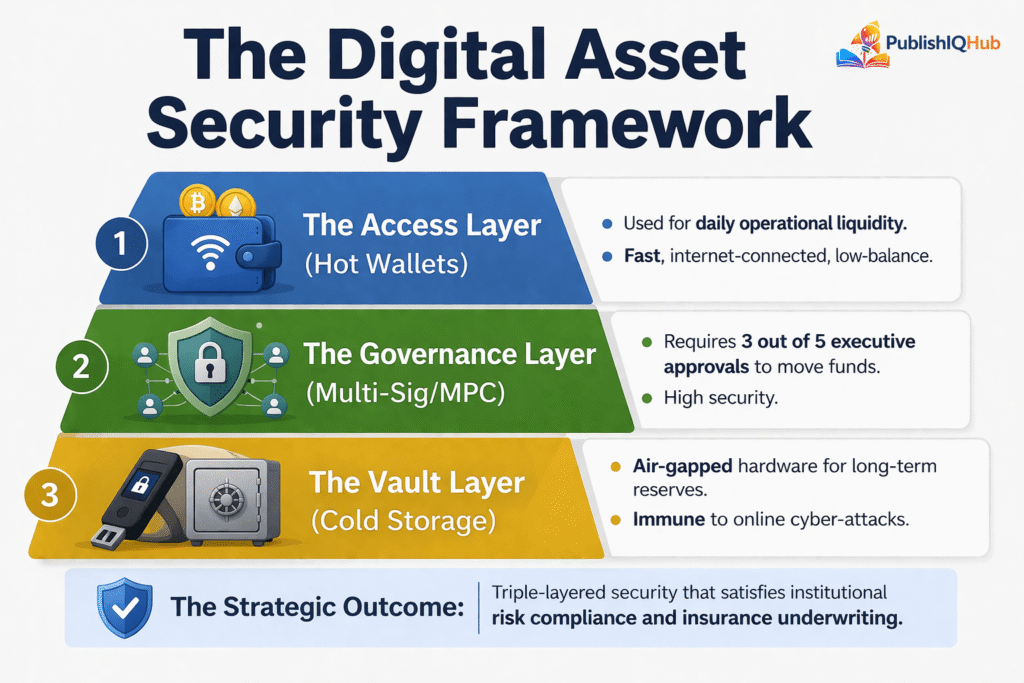
As the value of your inventory shifts to the cloud, your threat parameters shift as well. You cannot lock a Virtual Digital Asset in a physical vault. Securing these assets requires a new framework of digital custody.
Cold Storage vs. Hot Wallets
- Hot Wallets: Connected to the internet. They allow for fast, automated transactions but are vulnerable to cyber-attacks.
- Cold Storage: Completely disconnected from the internet (air-gapped hardware). This is where institutions keep the bulk of their digital reserves.
Multi-Party Computation (MPC)
The standard of modern security is MPC. Instead of having a single “private key” that can be stolen, the key is broken into mathematical shards and distributed among multiple executives. No single person can move the asset without a consensus of the shard-holders, effectively eliminating internal fraud and single-point-of-failure hacks.
Navigating the Regulatory Landscape
The primary friction point for digital assets and virtual assets remains regulatory clarity. Governments globally are working to categorize these instruments to prevent fraud while encouraging innovation.
- Taxation and Reporting: In many jurisdictions, VDAs are treated as property, meaning every transaction- whether you are selling a token or trading one for another—is a taxable event trigger. Automated tracking software is required to maintain compliance.
- Classification (Securities vs. Commodities): Are utility tokens a currency, or are they a stock? The answer determines which government agency has oversight, and the landscape shifts monthly.
- Proof of Reserves (PoR): For companies holding assets on behalf of clients, third-party cryptographic audits are becoming the legal standard for proving that they actually hold the assets they claim to.
Conclusion: The Ownership Inversion
We are living through an inversion of ownership. The digital representation of an asset is becoming more liquid, more secure, and more functional than the physical asset itself.
Treating digital assets as a novelty is a legacy mindset. The organizations that thrive in the second half of this decade will be those that treat their digital inventory with the same rigor, security, and strategic intent as they do their physical property.
We are no longer just participating in a digital economy; we are actively rewriting its rules. The only question left is whether you will be an architect of this shift or a spectator. The future of commerce is being written today. Stay connected with us for weekly breakdowns of the trends, tools, and shifts reshaping our global markets.
Frequently Asked Questions
1. Are Virtual Digital Assets just cryptocurrencies?
No. Cryptocurrencies are just one subset of VDAs. The category also includes stablecoins (tokens pegged to the US Dollar), utility tokens (used to access a specific software platform), and governance tokens (used to vote on community decisions).
What is the main benefit of tokenization for traditional businesses?
Tokenization unlocks liquidity. If you own an illiquid asset (like real estate), tokenizing it allows you to sell small pieces of it instantly on a global secondary market, rather than waiting months for a traditional buyer.
How do digital assets impact traditional accounting?
They require a shift in valuation models. Because many VDAs are volatile, accountants must decide whether to hold them at historical cost or mark them to market on the balance sheet, which can create earnings volatility.
What is the difference between a DAM and a VDA vault?
A Digital Asset Management (DAM) system is for traditional media files (videos, logos, PDFs). A VDA vault is a highly secure, cryptographic storage unit for blockchain-based financial tokens.
How do I start integrating digital assets into my business?
Start with an audit of your existing intellectual property. Identify which datasets, brand licenses, or content archives could be packaged and monetized digitally before you attempt to navigate complex blockchain markets.
Will digital assets replace physical currencies?
It is unlikely they will replace them entirely, but they will integrate deeply. Central banks globally are testing CBDCs (Central Bank Digital Currencies) to run alongside traditional paper currency, making global money movement frictionless.